From Poverty Hill to Prestige: Shaughnessy's Journey Through Economic Ups and Downs
The Golden Years: 1910s-1920s
When Shaughnessy first opened to buyers in 1909, it represented the pinnacle of Vancouver's aspirations. The neighborhood's grand homes—designed by renowned architects and built with meticulous attention to detail—became the addresses of choice for mining magnates, industrialists, and business titans. Hycroft Manor, Glen Brae, The Rosemary, and countless other architectural masterpieces rose on Shaughnessy's tree-lined streets, each one a testament to the wealth and refined taste of its owner.
The 1920s saw Shaughnessy at its zenith. The neighborhood embodied the optimism and prosperity of the post-World War I era. Large estates with manicured gardens, mature trees, and gracious architecture created an environment that seemed almost immune to the concerns of the outside world. For those fortunate enough to live there, Shaughnessy represented the ultimate achievement—a place where success was not just measured in dollars, but in the beauty and permanence of one's home and surroundings.
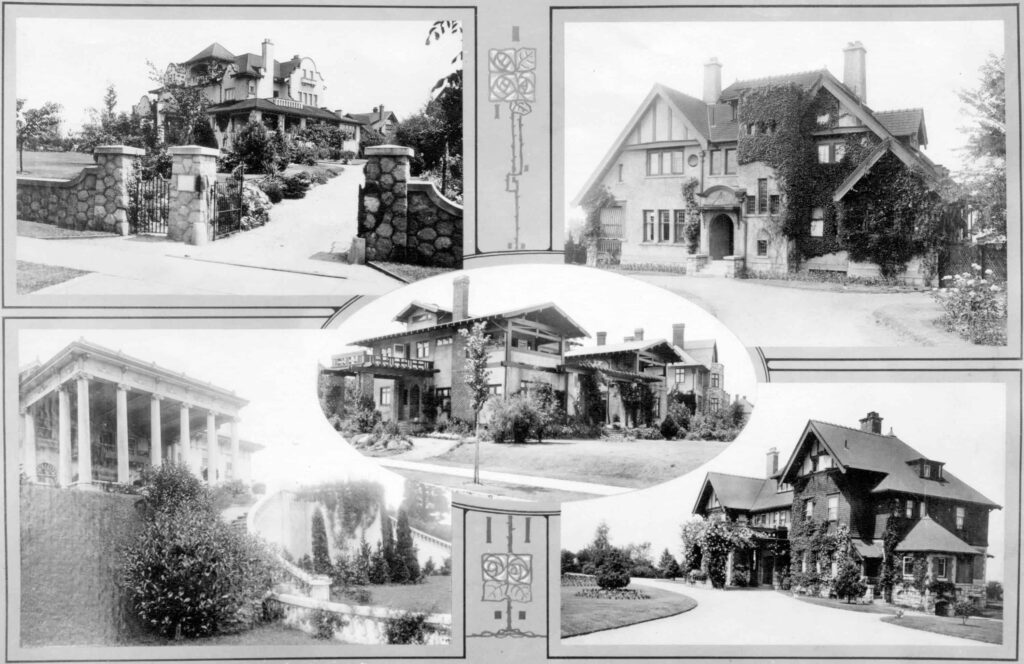
Shaughnessy's Golden Era homes from the 1920s, showcasing the wealth and architectural excellence of the neighborhood's zenith
During these golden years, Shaughnessy wasn't just a neighborhood; it was a statement. It said that you had arrived, that you understood quality, that you valued beauty and permanence over trends and fashions. The neighborhood's residents were among Vancouver's most influential citizens, and their homes reflected their status and vision.
The Crash: 1929 and Beyond
Then came October 1929, and the world changed overnight. The stock market crashed, fortunes evaporated, and the Great Depression descended upon North America with devastating force. For a neighborhood built on wealth and exclusivity, the impact was particularly severe.
Many of Shaughnessy's grand homes had been purchased with borrowed money, their owners confident that prosperity would continue indefinitely. When the economic collapse came, those assumptions proved tragically wrong. Property values plummeted. Owners who had invested their entire fortunes in their Shaughnessy estates found themselves facing financial ruin. Some lost their homes entirely. Others found themselves unable to maintain the large estates that had once been sources of pride.
The irony was bitter: the very size and grandeur that had made these homes so desirable during prosperous times now became a burden. Maintaining a 15,000-square-foot mansion with extensive grounds required significant resources. When those resources disappeared, the homes began to deteriorate.
"Poverty Hill": The Darkest Hours
By the 1930s and 1940s, Shaughnessy had earned a grim new nickname: "Poverty Hill." The name reflected the harsh reality of the neighborhood's decline. Grand homes that had once hosted lavish parties now stood partially empty or were subdivided into rooming houses to generate income for struggling owners. Beautiful gardens fell into disrepair. The manicured estates of the 1920s gave way to overgrown lots and neglected properties.
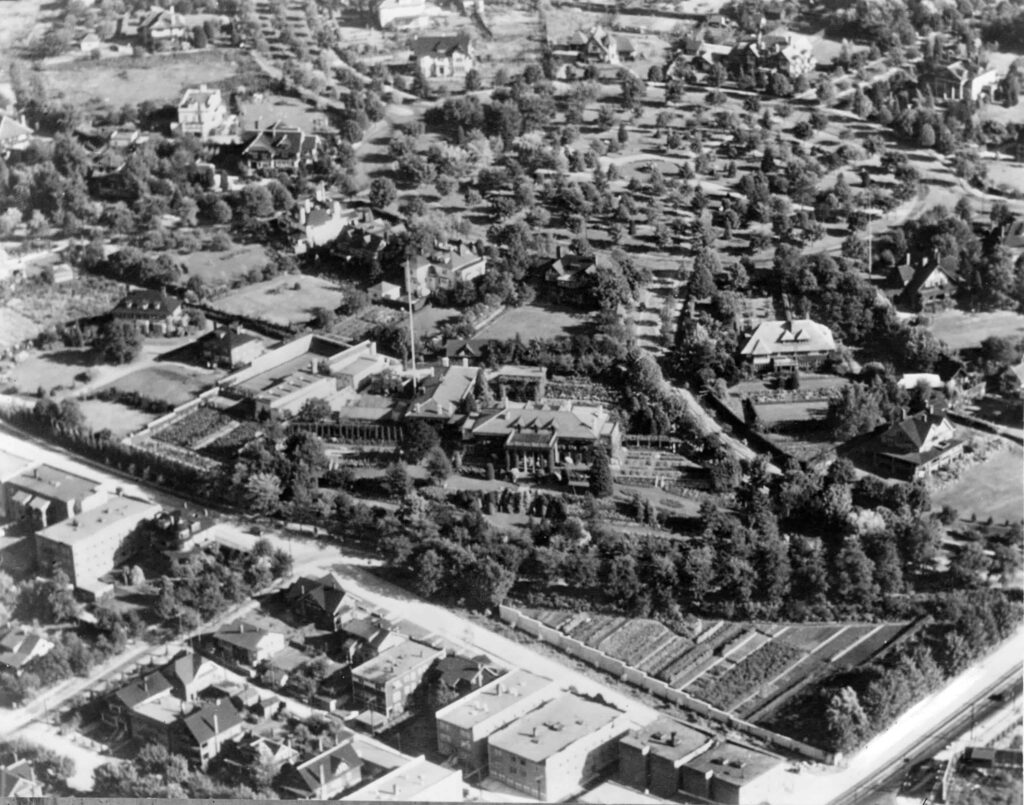
Shaughnessy neighborhood aerial view showing the mid-20th century layout during the decline
The city, recognizing the neighborhood's decline, took a step that would have been unthinkable a decade earlier: in 1960, it legalized rooming houses in Shaughnessy. This decision, while practical from an economic standpoint, represented an acknowledgment that the neighborhood had fallen from grace. The exclusive enclave was now home to renters and transient residents, a far cry from the industrial titans and business magnates who had built it.
By the 1960s, Shaughnessy faced an existential threat. The neighborhood was considered a "blighted area" by city planners. Many of the original heritage homes were occupied by residents who could no longer afford to maintain them properly. The threat of "demolition by neglect" hung over the neighborhood—not because developers wanted to tear down the homes, but because owners simply couldn't afford to keep them standing.
It seemed possible, even likely, that Shaughnessy's architectural treasures would simply crumble away, victims of economic forces beyond anyone's control. The vision that Richard Marpole, Thomas Shaughnessy, and Frederick G. Todd had created in 1907 appeared to be dying.
The Turning Point: The 1970s and 1980s
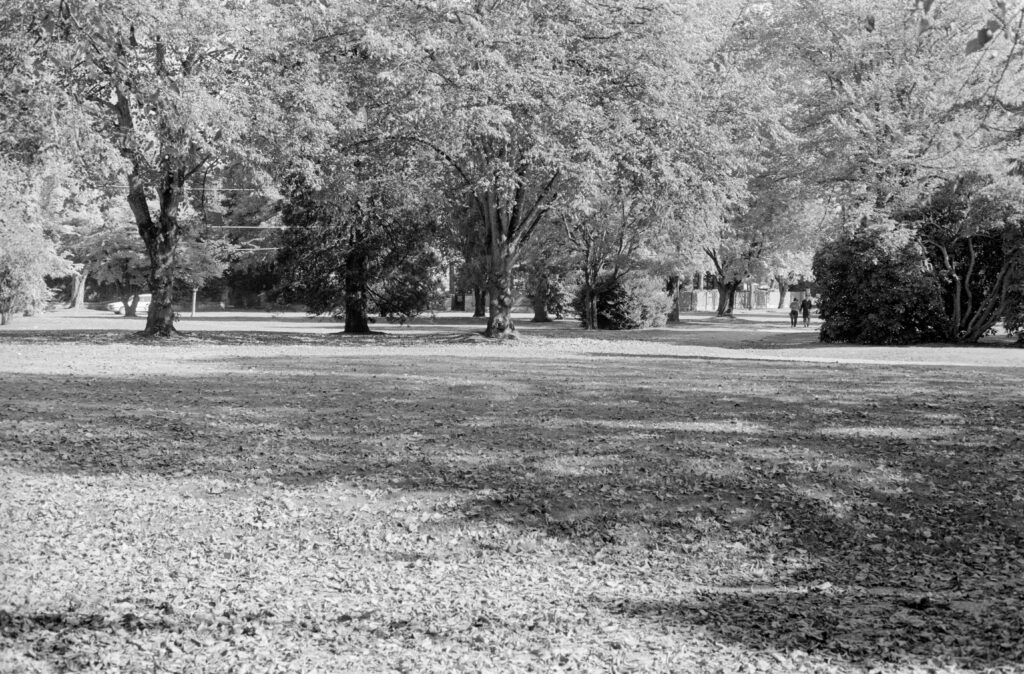
Historic Shaughnessy street scene with mature trees showing the neighborhood's character during preservation efforts
But Shaughnessy's story didn't end in decline. Instead, a remarkable transformation began to take shape in the 1970s and 1980s. Several factors converged to create the conditions for renewal.
First, the city recognized the neighborhood's historical and architectural significance. In the 1970s, there was growing awareness of heritage preservation and the value of maintaining historic neighborhoods. Shaughnessy, with its collection of pre-1940 homes and its carefully planned layout, was recognized as something irreplaceable.
Second, the real estate market began to shift. As Vancouver grew and prospered, the value of centrally located land increased dramatically. The large lots in Shaughnessy, which had seemed like a burden during the Depression, now appeared valuable again. Developers and homeowners began to see potential in the neighborhood.
Third, and perhaps most importantly, community members and heritage advocates began to fight for preservation. Rather than allowing Shaughnessy to be demolished and redeveloped into high-density housing, they argued for conservation. They recognized that the neighborhood's greatest value lay not in its development potential, but in its preservation.
In 1982, the city adopted an Official Development Plan specifically for Shaughnessy. This plan represented a careful balance between preservation and sustainable development. It encouraged the restoration of heritage homes while allowing for sensitive infill development. It mandated that the estate-like landscaping that defined Shaughnessy's character be preserved. It established design guidelines to ensure that new construction would be compatible with the neighborhood's historic character.
The 1982 plan was a turning point. It signaled that Shaughnessy was worth preserving, that its heritage was valuable, and that the city was committed to protecting it.
The Renaissance: 1990s to Present
What followed was a remarkable renaissance. As Vancouver's economy boomed and the city's real estate market became increasingly competitive, Shaughnessy's combination of heritage charm, large lots, and central location became increasingly attractive to affluent buyers. The neighborhood that had been called "Poverty Hill" just decades earlier was now recognized as one of Vancouver's most desirable addresses.
Homeowners began investing in restoration projects, bringing heritage homes back to their original grandeur. Architects and contractors specializing in heritage restoration found steady work in Shaughnessy. The neighborhood's character, which had seemed threatened just years earlier, was now being actively preserved and celebrated.
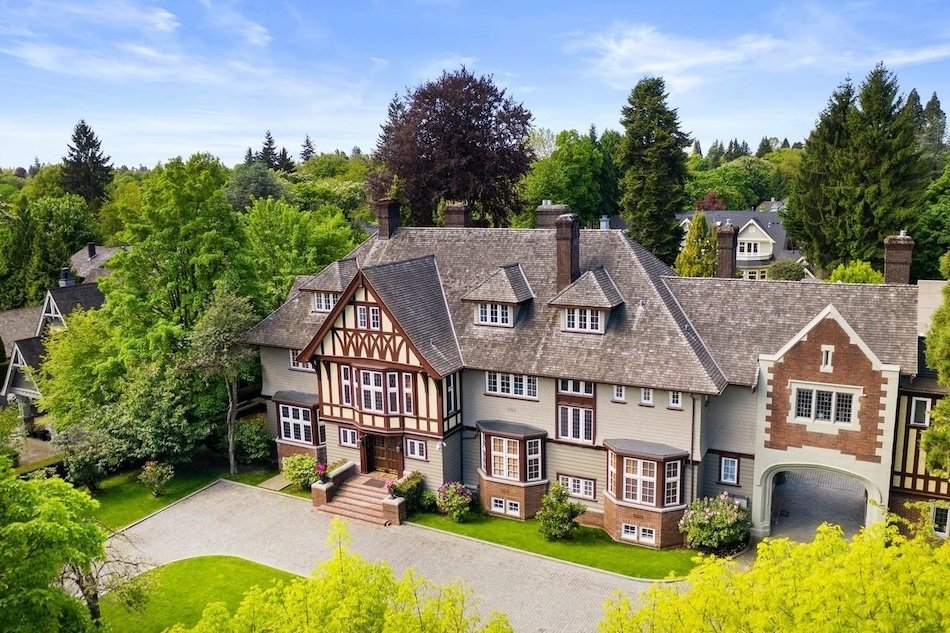
Restored heritage Tudor-style home showcasing successful restoration and preservation of Shaughnessy's architectural treasures
Ironically, the well-maintained heritage homes that had survived the Depression years proved to be the neighborhood's greatest asset. A home like The Hollies, built in 1913 and carefully maintained through the decades, consistently led the market in resale value. This demonstrated a fundamental truth: authentic heritage homes, properly maintained, hold their value better than newer construction.
In 2015, First Shaughnessy was officially designated as a Heritage Conservation Area, the culmination of decades of preservation efforts. This designation represented formal recognition of what the community had long understood: that Shaughnessy's greatest value lay in its preservation, not its redevelopment.
Lessons from Shaughnessy's Journey
Shaughnessy's remarkable journey from prestige to "Poverty Hill" and back to prestige again offers important lessons. First, it demonstrates the power of thoughtful design and planning. The neighborhood that Frederick G. Todd created in 1907 was resilient enough to survive decades of neglect and economic hardship. The curved streets, mature trees, and generous lots that defined Shaughnessy's character proved to be enduring assets.
Second, Shaughnessy's story shows the importance of community advocacy and heritage preservation. The neighborhood survived not because of market forces alone, but because people cared enough to fight for its preservation. Heritage advocates, community members, and city planners worked together to recognize Shaughnessy's value and protect it for future generations.
Third, Shaughnessy demonstrates that authentic heritage has lasting value. In an era of disposable architecture and short-term thinking, Shaughnessy's well-maintained heritage homes have proven to be better investments than newer construction. The craftsmanship, attention to detail, and quality materials that defined early Shaughnessy homes have stood the test of time.
Today's Shaughnessy
Today, Shaughnessy stands as a testament to resilience and the power of preservation. The neighborhood remains largely residential, with a higher-than-average proportion of heritage houses from the first half of the twentieth century. The tree-lined streets, parks, and estate-like grounds that Frederick G. Todd envisioned in 1907 remain largely intact.
The homes that survived "Poverty Hill" are now among Vancouver's most sought-after properties. Owners take pride in maintaining and restoring these architectural treasures. The neighborhood has become a destination for those who appreciate heritage architecture, careful urban planning, and the kind of enduring beauty that transcends economic cycles.
From the depths of the Great Depression to its current status as one of Canada's most prestigious neighborhoods, Shaughnessy's journey is one of remarkable resilience. It's a reminder that thoughtful design, community determination, and respect for heritage can overcome even the most challenging circumstances. In a world of rapid change and disposable architecture, Shaughnessy stands as proof that some things are worth preserving.
Share This Article
Ana Matovinovic
Heritage homes specialist throughout the Lower Mainland, including Shaughnessy, Kitsilano, Mount Pleasant, Vancouver's West End, the North Shore, Burnaby, and New Westminster. Ana brings a European perspective on heritage preservation, combining respect for architectural history with modern comfort and luxury.
Related Articles
Victorian Architecture in Shaughnessy: Preserving Architectural Masterpieces
Explore the distinctive Victorian and Edwardian architectural styles that define Shaughnessy and learn how to preserve these architectural gems.
Heritage Home Inspection Checklist: A Comprehensive Guide to Evaluating Your Property
Learn what to look for during a heritage home inspection, from foundations to electrical systems, with expert guidance for Lower Mainland properties.
Learn More About Heritage Homes
Our Services
Discover how we specialize in marketing heritage homes with authentic storytelling and strategic positioning.
Explore Services →Heritage Resources
Access guides, tips, and resources for preserving and maintaining your heritage home's character and value.
View Resources →Interested in Heritage Home Marketing?
Let's discuss how to position your heritage home and connect with buyers who truly value its character and significance.
Schedule a Consultation