What Type of Heritage Home Renovation Will Give the Best Return on Investment
Heritage home renovations present a unique challenge: how do you modernize for contemporary living while preserving the architectural character that makes these properties valuable? More importantly, which renovations will actually pay off when it comes time to sell?
The truth is that heritage home buyers are a different market. They're not looking for the same renovations that appeal to buyers of contemporary homes. Understanding what renovations resonate with heritage home buyers—and which ones actually improve your home's value—can mean the difference between a renovation that pays for itself and one that leaves you underwater.
Kitchen Renovations: The Highest ROI Investment
The kitchen is consistently the renovation that delivers the strongest return on investment in heritage homes, and for good reason. A well-executed kitchen renovation can increase your home's value by 50-70% of the renovation cost—sometimes even more in the heritage market.
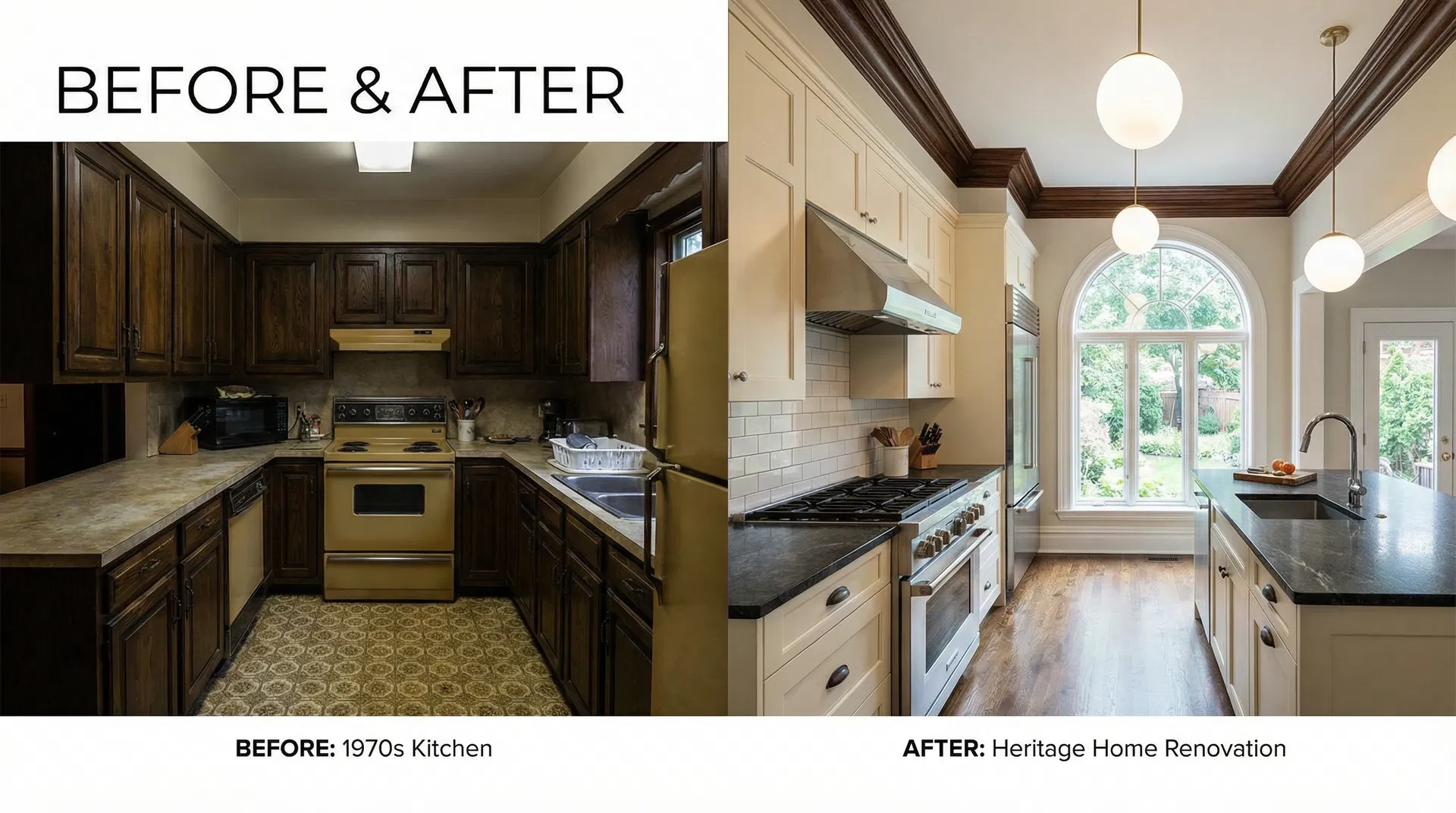
The key to a successful heritage kitchen renovation is balance. Heritage home buyers want modern functionality—updated appliances, adequate counter space, proper lighting—but they also want the kitchen to feel like it belongs in the home. This means respecting the home's architectural style, preserving original details where possible, and choosing finishes that complement rather than clash with the home's character.
A high-ROI heritage kitchen renovation typically includes: updated appliances (stainless steel or vintage-style), new cabinetry that respects the home's era, quality countertops (granite, marble, or butcher block), improved lighting, and updated plumbing and electrical systems. The renovation should feel like a natural evolution of the home rather than a modern insertion.
Budget expectations: A quality heritage kitchen renovation typically costs $50,000 to $100,000 or more, depending on size and finishes. In the Lower Mainland market, buyers expect to see this investment reflected in the asking price.
Bathroom Upgrades: Strong Returns with Luxury Appeal
Master bathroom renovations are the second-strongest ROI investment in heritage homes. A luxury master bathroom renovation can return 40-60% of its cost, particularly when it includes high-end finishes and thoughtful design.
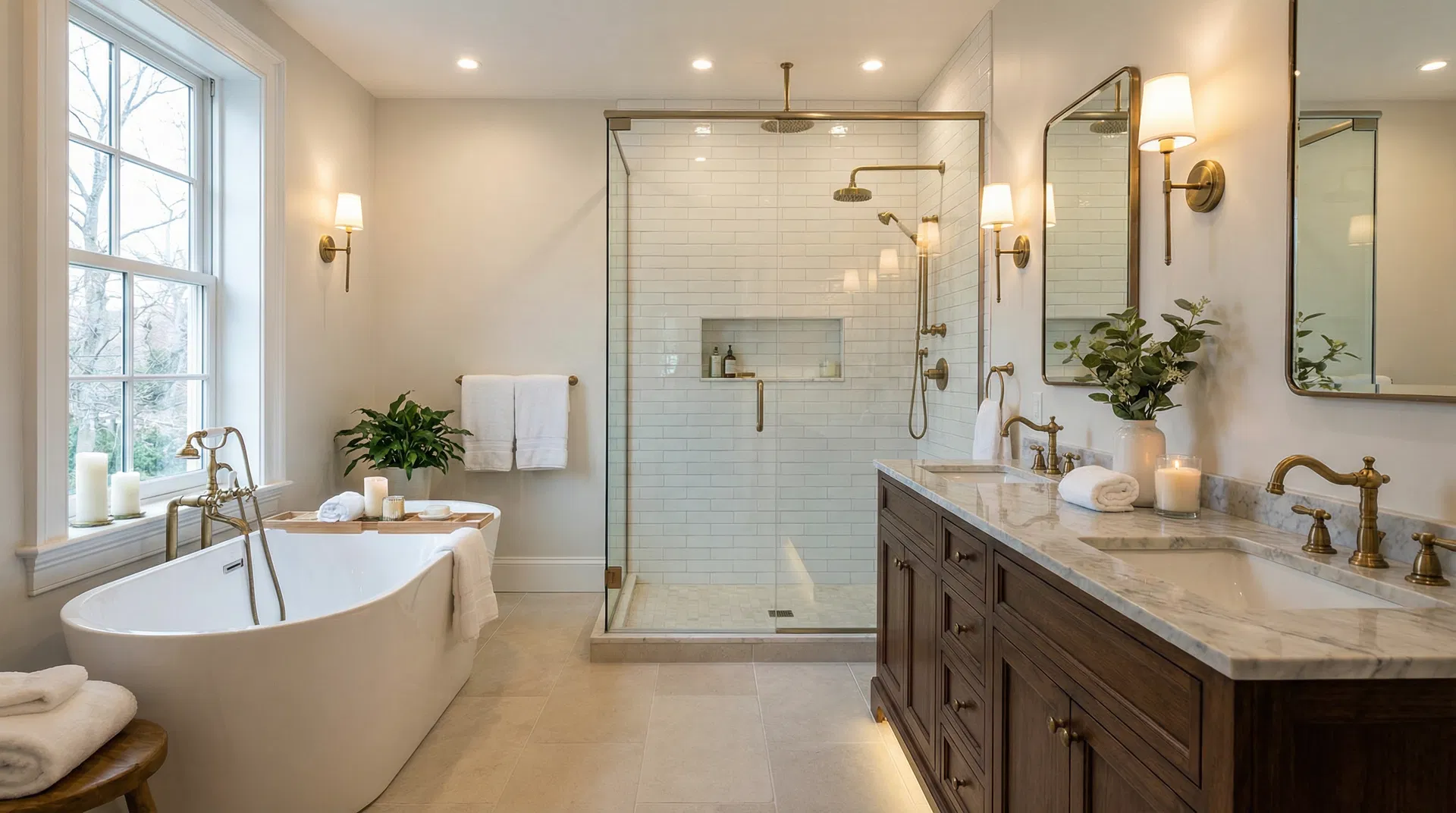
A spa-like master bathroom with quality finishes and luxury amenities appeals strongly to heritage home buyers
Heritage home buyers, particularly those purchasing in neighborhoods like Shaughnessy and Kitsilano, expect master bathrooms that feel like personal retreats. This means investing in quality fixtures, natural materials, and thoughtful design. A successful heritage bathroom renovation includes a soaking tub, a spacious walk-in shower with quality tile, double vanity with marble or granite countertops, heated floors, and vintage-inspired fixtures that complement the home's era.
Secondary bathrooms can be updated more modestly—these don't need to be luxurious, just functional and clean. The real ROI comes from investing in the master bath.
Budget expectations: A quality master bathroom renovation costs $30,000 to $60,000. Secondary bathrooms can be updated for $10,000 to $20,000 each.
Electrical and Plumbing System Upgrades: Essential but Limited ROI
Updating electrical and plumbing systems is absolutely essential in heritage homes, but here's the important distinction: these upgrades don't typically increase your home's value. Instead, they prevent your home's value from decreasing.
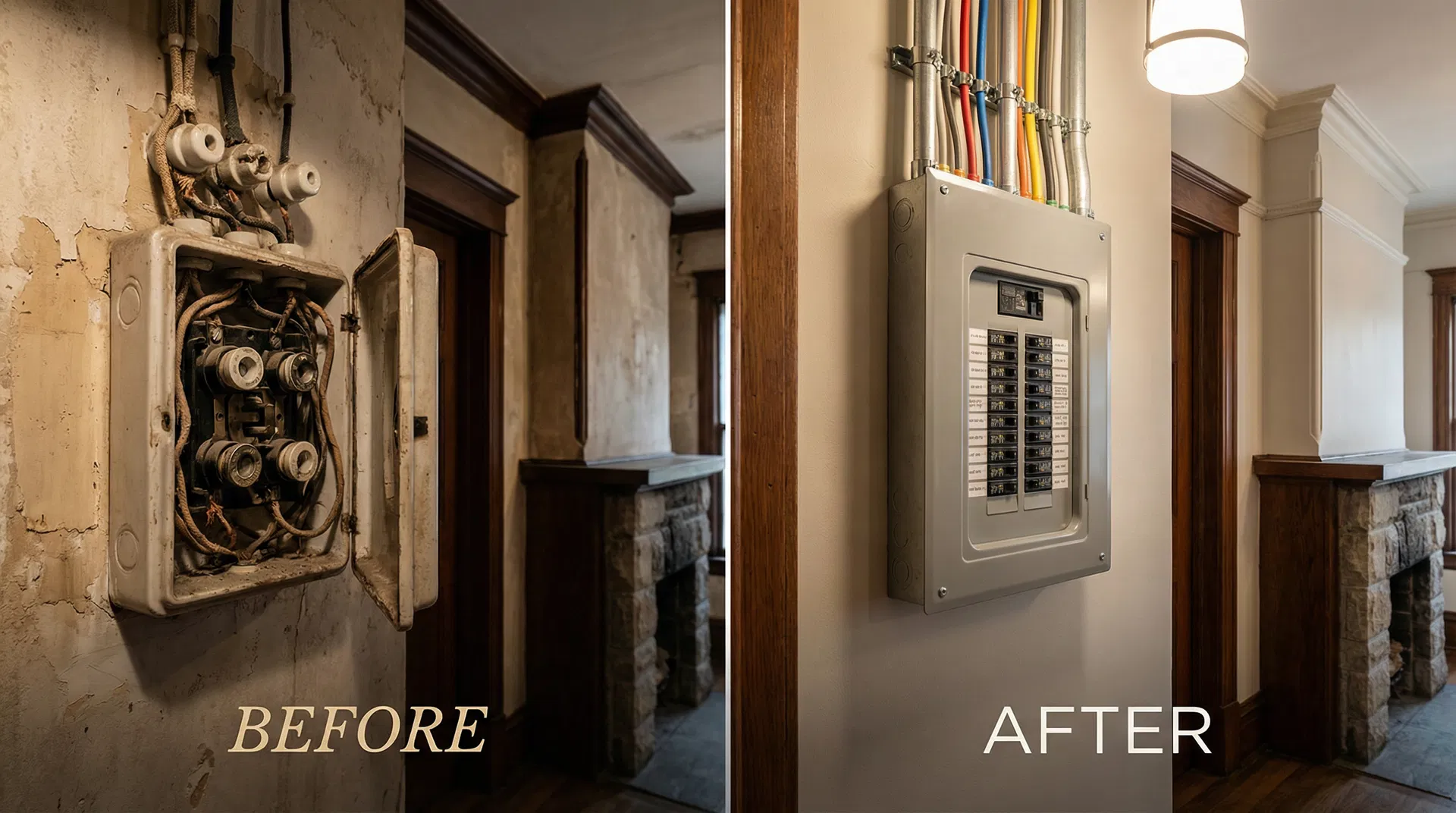
Modern electrical systems are essential for safety and functionality, though they don't typically increase property value
Think of system upgrades as the price of admission. Heritage home buyers expect these systems to be updated and code-compliant. If your home still has knob-and-tube wiring, outdated plumbing, or a fuse box, buyers will either walk away or significantly reduce their offer to account for the cost of upgrades.
However, if you've already updated these systems, you won't get a premium for them. Buyers simply expect them to be done. This doesn't mean you shouldn't do them—you absolutely should—but understand that the ROI is indirect. You're protecting your home's value rather than increasing it.
Budget expectations: Electrical system upgrades cost $10,000 to $30,000. Full plumbing replacement can cost $15,000 to $40,000. Factor these into your renovation budget as essential but not value-adding investments.
Roof Restoration: Moderate ROI with Long-Term Benefits
Roof restoration in heritage homes presents an interesting ROI calculation. A new roof doesn't directly increase your home's value, but a failing roof will absolutely decrease it. A restored roof protects your investment and signals to buyers that the home has been well-maintained.
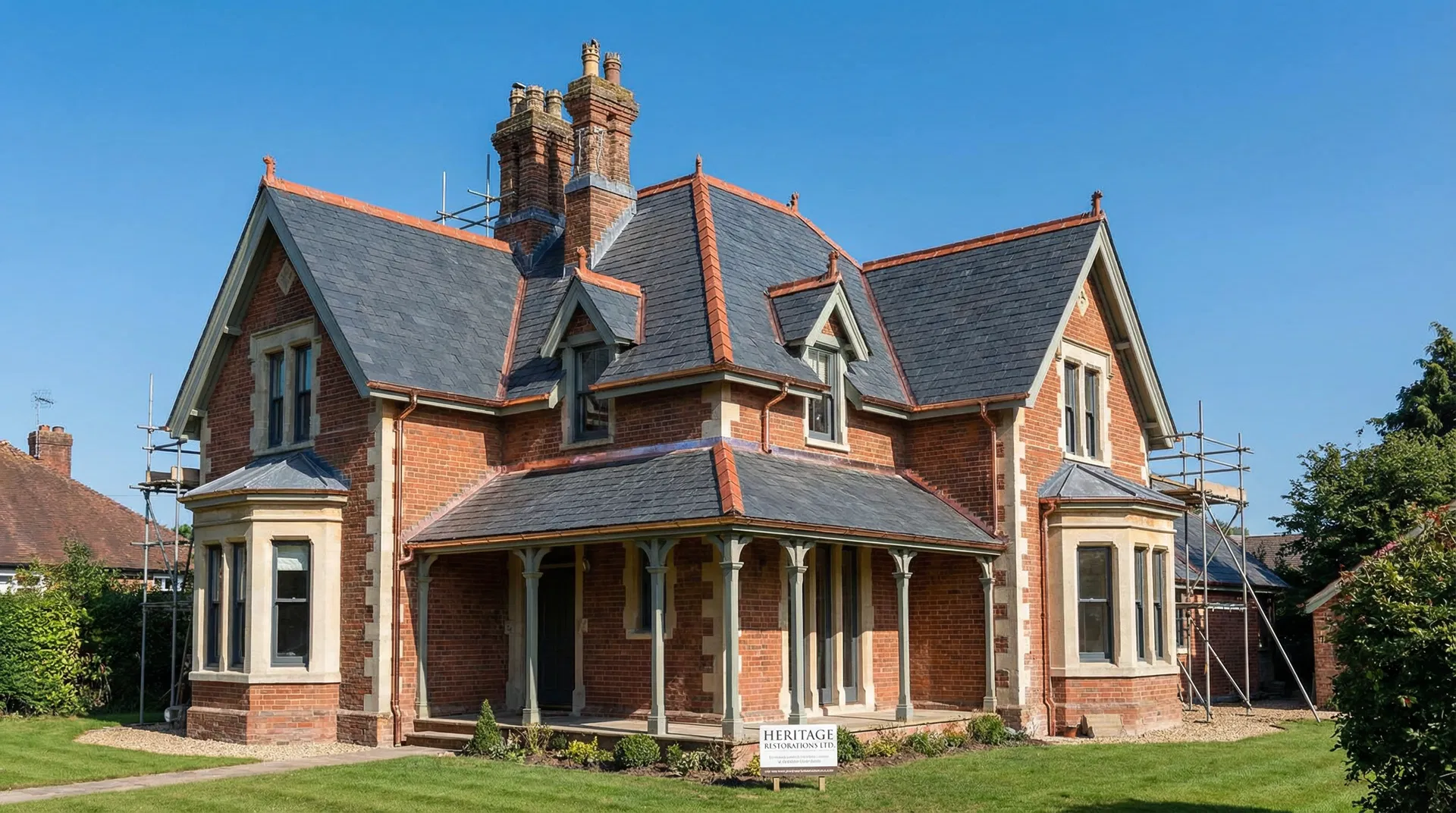
A properly restored roof protects your investment and demonstrates thoughtful stewardship of the home's heritage character
The key to roof ROI in heritage homes is using appropriate materials. If your home originally had slate, clay tiles, or wood shingles, restoring with these materials (rather than replacing with asphalt shingles) signals to heritage home buyers that you understand and respect the home's character. This can return 30-40% of the restoration cost.
However, if you simply replace a slate roof with asphalt shingles to save money, you're actually decreasing your home's value in the heritage market. Heritage home buyers will see this as a step down, not a practical upgrade.
Budget expectations: Slate or clay tile roof restoration costs $25,000 to $50,000 or more. The investment pays off through buyer confidence and long-term protection rather than direct value increase.
Foundation and Structural Repairs: Essential but Not Value-Adding
Like electrical and plumbing upgrades, foundation and structural repairs are absolutely essential but don't increase your home's value. A home with foundation problems will sell for significantly less than a comparable home with a sound foundation. Once the foundation is repaired, you've simply brought the home back to market standard.
Foundation repairs are essential for protecting your investment and ensuring buyer confidence
The ROI calculation for foundation work is similar to electrical and plumbing: you're not gaining value, you're preventing loss. A $50,000 foundation repair might prevent a $100,000 loss in property value. That's important, but it's not the same as a renovation that increases your home's value.
Budget expectations: Foundation repairs vary dramatically depending on the issue. Minor repairs might cost $5,000 to $10,000. Major foundation work can cost $20,000 to $100,000 or more.
Exterior Upgrades: Moderate ROI with Curb Appeal Impact
Exterior renovations—new siding, windows, doors, and landscaping—deliver moderate ROI of 30-50%, depending on the quality and appropriateness of the work. The key to exterior ROI in heritage homes is maintaining architectural authenticity.
Replacing original wood siding with vinyl, for example, will actually decrease your home's value in the heritage market. Heritage home buyers specifically value original materials and authentic restoration. However, restoring original siding or replacing it with period-appropriate materials will be appreciated by buyers and can return a solid portion of your investment.
Similarly, window and door replacements should prioritize authenticity. Heritage-appropriate replacements that maintain the original style and proportions will return 40-50% of costs. Modern replacements that don't respect the home's character will return much less.
Budget expectations: Quality exterior work costs $20,000 to $50,000 depending on scope. The ROI depends heavily on whether the work respects the home's heritage character.
Basement Finishing: Variable ROI Depending on Execution
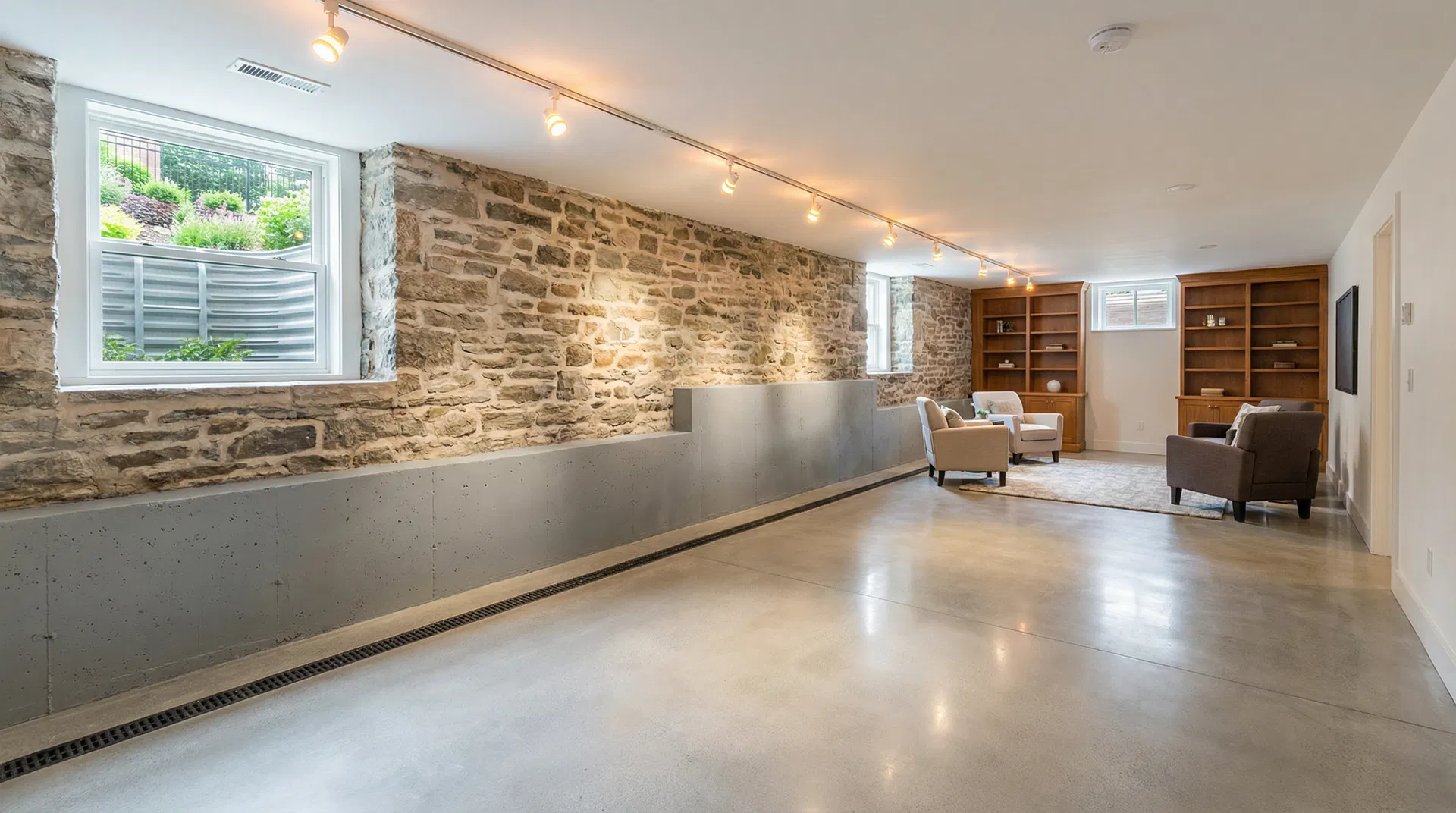
Finishing a basement can return 50-70% of costs if done well, but it's also an area where poor execution can waste money. The key to basement ROI is creating functional, attractive space that feels like a natural part of the home rather than a separate addition.
A well-finished basement with proper waterproofing, good lighting, quality finishes, and thoughtful design can significantly increase your home's usable square footage and appeal to buyers. However, a poorly finished basement with moisture issues, inadequate lighting, or cheap finishes will actually detract from your home's value.
Budget expectations: Quality basement finishing costs $30,000 to $60,000 depending on size and finishes.
Renovations to Avoid or Minimize
Certain renovations deliver poor ROI in heritage homes and should be approached carefully:
Over-the-top modern additions that clash with the home's character will actually decrease value. Heritage home buyers are specifically buying for character, not for contemporary design statements.
Removing original architectural details to create open-concept layouts often backfires. Heritage home buyers value the home's original design. Opening up a formal dining room into the kitchen might appeal to some buyers but will alienate others who specifically value the home's original layout.
Cheap finishes and shortcuts are particularly visible in heritage homes. Because these homes are scrutinized more carefully by buyers, cutting corners on renovation quality will be noticed and will reduce your ROI.
Trendy design choices that will feel dated in five years are risky in heritage homes. Stick with timeless design that will appeal to buyers for years to come.
The Heritage Home Renovation Strategy
The most successful heritage home renovations follow a clear strategy:
Prioritize the kitchen and master bathroom. These are where you'll see the strongest direct ROI. Invest in quality finishes and thoughtful design that respects the home's character.
Complete essential system upgrades. Electrical, plumbing, and foundation work might not increase value, but they're essential for buyer confidence and long-term protection of your investment.
Respect the home's character. Every renovation decision should consider how it affects the home's heritage appeal. Authenticity and thoughtful stewardship resonate with heritage home buyers.
Invest in quality over quantity. One beautifully executed renovation delivers better ROI than multiple mediocre ones. Heritage home buyers notice quality and are willing to pay for it.
Plan for the long term. Heritage home renovations are investments in your home's future value and your enjoyment of the property. Think beyond the immediate sale and consider how renovations will serve you and future buyers for years to come.
Working with Heritage Renovation Specialists
Heritage home renovations require specialized expertise. A contractor experienced in heritage homes understands the particular challenges these properties present and can help you make renovation decisions that balance modern functionality with heritage character.
When planning renovations, work with professionals who understand both the technical requirements of older homes and the aesthetic expectations of heritage home buyers. This expertise will help ensure that your renovation investments deliver strong returns.
The Bottom Line
Heritage home renovations can deliver excellent returns when approached strategically. Kitchen and bathroom renovations offer the strongest direct ROI, while system upgrades and structural repairs are essential investments that protect your home's value. The key is understanding that heritage home buyers are a different market with different priorities. They're investing in character, history, and architectural beauty—not just square footage and modern amenities.
By prioritizing renovations that enhance both functionality and heritage character, you're not just improving your home's immediate appeal. You're investing in a property that will continue to appreciate and attract discerning buyers for years to come. That's the real return on investment in heritage home renovation.
Share This Article
Ana Matovinovic
Heritage homes specialist throughout the Lower Mainland, including Shaughnessy, Kitsilano, Mount Pleasant, Vancouver's West End, the North Shore, Burnaby, and New Westminster. Ana brings a European perspective on heritage preservation, combining respect for architectural history with modern comfort and luxury.
Related Articles
Victorian Architecture in Shaughnessy: Preserving Architectural Masterpieces
Explore the distinctive Victorian and Edwardian architectural styles that define Shaughnessy and learn how to preserve these architectural gems.
Heritage Home Inspection Checklist: A Comprehensive Guide to Evaluating Your Property
Learn what to look for during a heritage home inspection, from foundations to electrical systems, with expert guidance for Lower Mainland properties.
Learn More About Heritage Homes
Our Services
Discover how we specialize in marketing heritage homes with authentic storytelling and strategic positioning.
Explore Services →Heritage Resources
Access guides, tips, and resources for preserving and maintaining your heritage home's character and value.
View Resources →Interested in Heritage Home Marketing?
Let's discuss how to position your heritage home and connect with buyers who truly value its character and significance.
Schedule a Consultation