Preserving Kitsilano's Craftsman Kitchens: Honoring Heritage While Embracing Modern Living
Introduction
Kitsilano's charming Craftsman bungalows and Arts & Crafts homes represent some of Vancouver's most beloved residential architecture. Built primarily between 1905 and 1930, these homes showcase a design philosophy that valued handcrafted details, quality materials, and human-scaled proportions. The kitchen, often considered the heart of the home, exemplifies this commitment to thoughtful design and functional beauty.
The Craftsman kitchen presents a unique preservation challenge in today's real estate market. Original kitchens were designed for a very different era of cooking and domestic life—a time when kitchens were primarily work spaces for meal preparation, often separate from family gathering areas. Today's homeowners want open layouts, modern appliances, efficient workflows, and spaces that seamlessly integrate cooking with entertaining and family life. The question becomes: How do we honor the original design intent while creating a kitchen that genuinely works for 21st-century living?
This is not just an aesthetic question; it's a practical one that affects both the functionality of your home and its market appeal. Heritage buyers—the most discerning and values-aligned purchasers—want to see authentic preservation efforts, not cosmetic updates that mask the home's true character.
Understanding Original Craftsman Kitchen Features
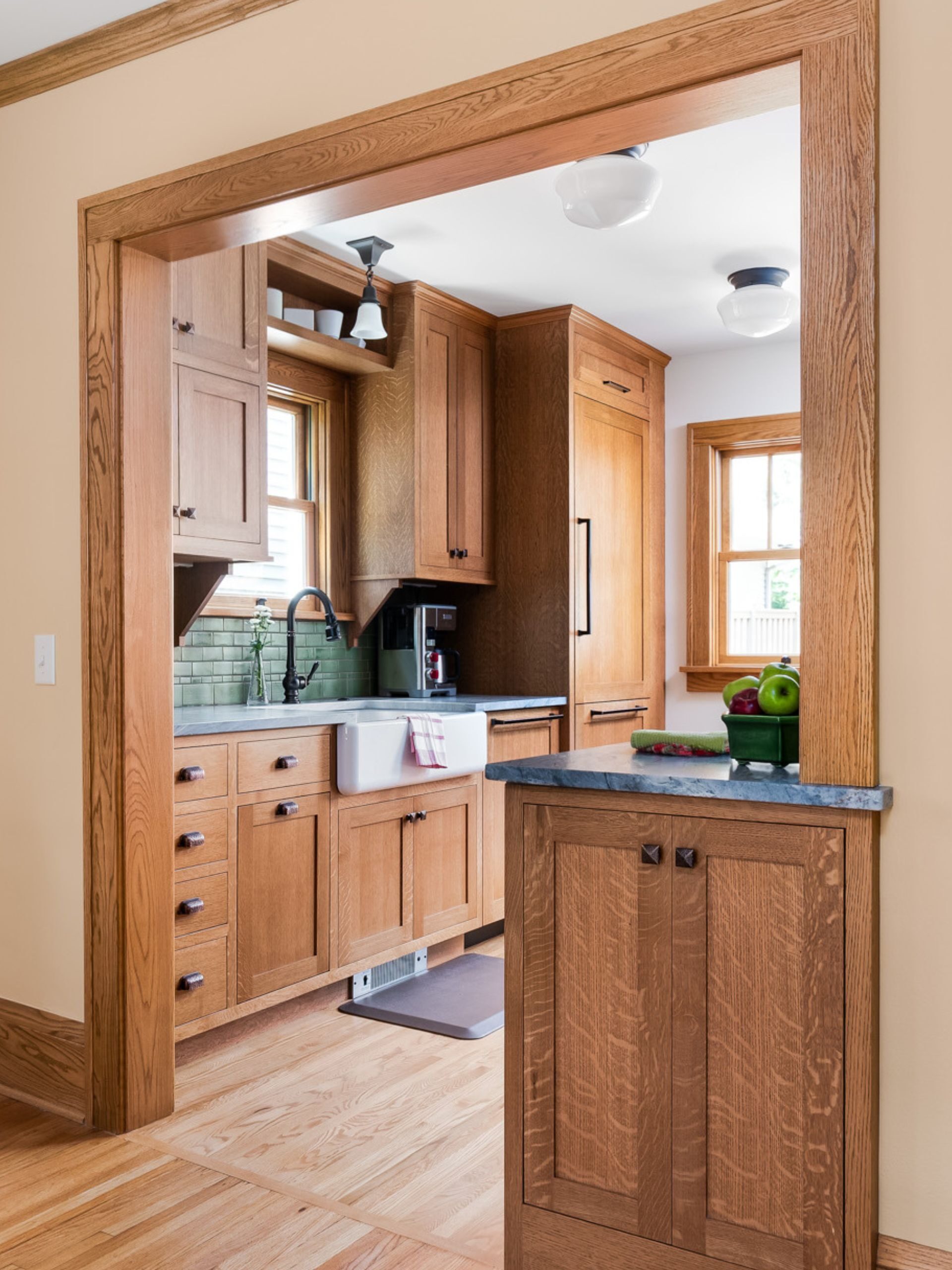
Original Craftsman kitchens featured custom-built cabinetry with visible wood grain, simple hardware, and thoughtful organization. These weren't mass-produced cabinets but carefully crafted storage solutions reflecting the homeowner's needs and the carpenter's skill. The design philosophy emphasized honest materials and construction—you could see the joinery, the wood grain, the craftsmanship.
Key characteristics of authentic Craftsman kitchens include:
Custom Built-in Cabinetry - Rather than freestanding cabinets, Craftsman kitchens featured built-ins that were integral to the room's design. These cabinets often extended from floor to ceiling, maximizing storage while maintaining visual harmony. The wood was typically oak, maple, or fir, chosen for durability and beauty.
Simple, Functional Hardware - Hardware was minimal and functional. Pulls were typically simple metal designs—often bronze or copper—that complemented rather than dominated. The emphasis was on utility and honest design rather than ornament.
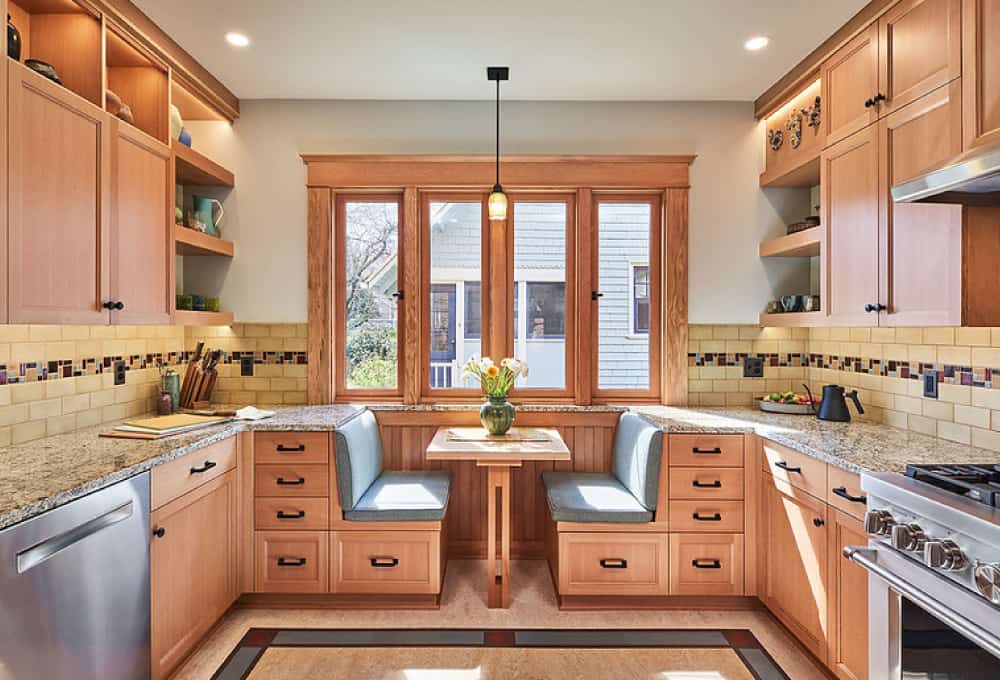
Open Shelving and Display - Many Craftsman kitchens incorporated open shelving for everyday dishes and glassware. This wasn't a space-saving measure but a design choice that celebrated the beauty of well-chosen dishware and kept frequently used items accessible.
Tile Work and Backsplashes - Craftsman kitchens often featured handmade or artisan tile work. Subway tile was popular, but so were custom tiles with subtle patterns or colors that complemented the cabinetry.
Integrated Workspace - The kitchen layout reflected efficient workflow. The "work triangle" (sink, stove, storage) was carefully considered, though the terminology didn't exist yet. Countertops were typically wood or tile, chosen for durability and patina.
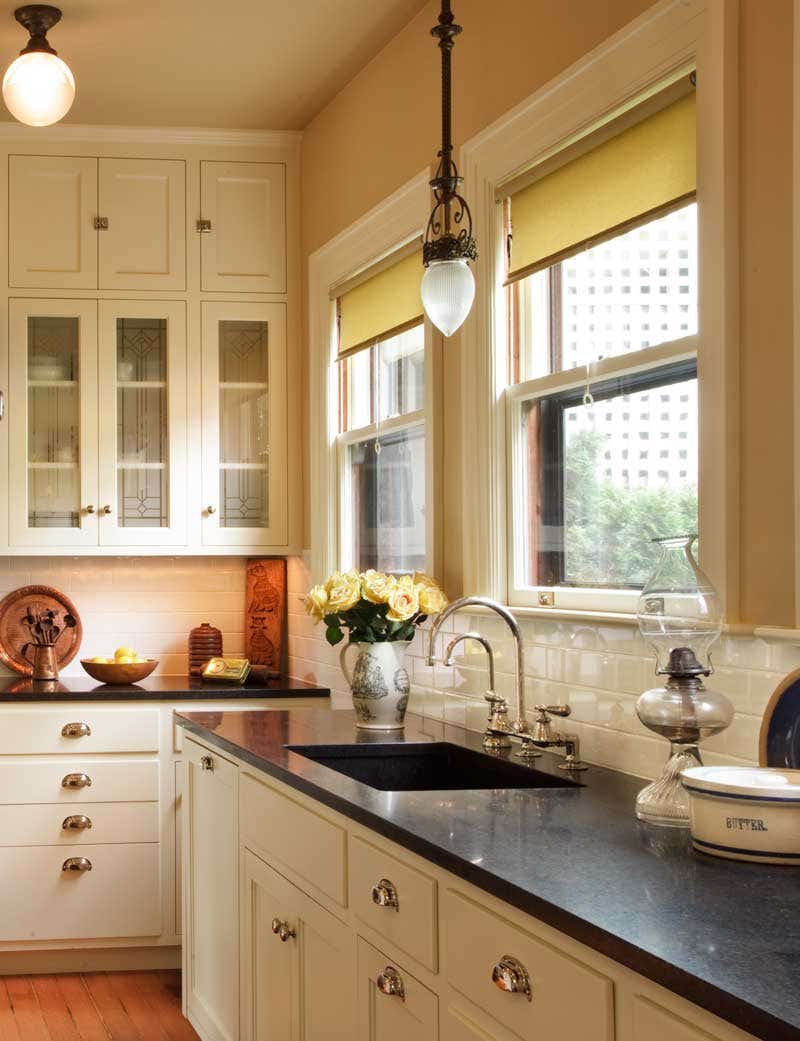
Natural Lighting - Windows were often positioned to provide natural light for food preparation. Some kitchens featured glass-front upper cabinets to display dishes and allow light to penetrate deeper into the room.
The Challenge: Original Design vs. Modern Living
The disconnect between original Craftsman kitchen design and contemporary expectations creates the central preservation challenge. Original kitchens were designed when cooking was a full-time occupation for one household member, meals were prepared from scratch using fresh, seasonal ingredients, the kitchen was primarily a work space separate from entertaining areas, and appliances were minimal.
Modern kitchens, by contrast, need to accommodate multiple cooks working simultaneously, cooking as a social and entertaining activity, integration with living and dining spaces, extensive appliance suites, large-scale food storage, efficient cleanup workflows, proper ventilation, and accessibility considerations.
This isn't a failure of Craftsman design; it's simply a reflection of how domestic life has evolved. The question isn't whether to preserve the original kitchen as a museum piece, but how to honor its design principles while creating a space that genuinely serves contemporary living.
The Market Reality: Why Heritage Buyers Care About Kitchen Preservation
When we work with heritage home buyers, kitchen decisions significantly influence their perception of the home's authenticity and value. Buyers who choose heritage properties are typically motivated by architectural appreciation, authenticity and integrity, investment value, sustainability and craftsmanship, and storytelling.
Heritage buyers want to live in a home that feels genuine, not a reproduction. A kitchen that preserves original elements—even if updated for functionality—signals that the homeowner respects the home's heritage. Moreover, heritage homes in well-maintained condition with authentic character details consistently outperform the broader market. A thoughtfully preserved kitchen enhances both the home's appeal and its long-term value.
Modern Preservation Approaches: Moving Beyond All-or-Nothing
Fortunately, we're seeing a significant shift in how heritage homeowners and designers approach kitchen renovation. Rather than viewing it as an all-or-nothing choice between complete preservation or complete replacement, thoughtful preservation is becoming increasingly popular.
Preservation Through Restoration - Original cabinetry is restored and refinished rather than removed. This might involve repairing damaged wood, replacing worn hardware with period-appropriate pieces, or refinishing surfaces to reveal original wood grain.
Sympathetic Integration - Modern appliances are chosen for their proportions and finishes so they integrate rather than dominate. A stainless steel refrigerator with a panel-ready front can blend seamlessly with cabinetry. A range with a simple design can sit comfortably in a Craftsman kitchen.
Functional Updating - Plumbing and electrical systems are updated to modern standards without altering the visual character. A new sink might replicate the original style while incorporating modern drainage. Electrical outlets are installed discreetly.
Layout Evolution - While the fundamental workspace might remain similar, thoughtful modifications can improve workflow. An island might be added using materials and design that complement the original cabinetry.
Material Choices - New materials are chosen to complement rather than contrast with original elements. If the original kitchen featured oak cabinetry, new elements might use matching oak or complementary wood tones.
Practical Preservation Strategies: A Step-by-Step Approach
If you own a Craftsman home in Kitsilano with an original or early kitchen, here's how to approach preservation thoughtfully:
Start with Documentation - Before any work begins, photograph and document your original kitchen comprehensively. Take close-up photos of hardware, cabinetry details, tile work, and overall layout. This creates a reference for restoration work and helps you understand what you're working with.
Assess Original Elements - Identify which original elements are worth preserving. Original cabinetry is almost always worth saving—it's the most visible and character-defining element. Original tile work, hardware, and fixtures should be evaluated for condition and authenticity.
Find the Right Professionals - You need contractors and designers who understand Craftsman design principles and heritage preservation. Look for professionals with experience in heritage homes. Ask to see examples of previous kitchen projects. The right team will understand that preservation isn't about creating a museum piece but about honoring design principles while creating a functional space.
Plan for Systems Updates - Modern kitchens require updated plumbing, electrical, and ventilation systems. Plan these updates early so they can be integrated thoughtfully. A good designer will help you route new systems in ways that minimize visual impact.
Choose Appliances Carefully - Select appliances that work with your kitchen's aesthetic rather than against it. Panel-ready refrigerators, ranges with simple designs, and integrated dishwashers can blend seamlessly.
Respect the Original Layout - While some modifications might be necessary, try to preserve the fundamental layout and workflow of the original kitchen. If the original sink was positioned under a window, keep it there if possible.
Budget for Quality - Preservation work often costs more than replacement. Custom cabinetry restoration, period-appropriate hardware, and skilled craftsmanship all have a price. However, this investment pays dividends in authenticity, durability, and long-term value.
Real-World Examples: Kitsilano Kitchen Preservation
Kitsilano has seen numerous successful kitchen preservation projects in recent years. The Restored Original Approach involves restoring original cabinetry to its original condition, updating only the systems that require modernization. These kitchens feel authentically Craftsman while functioning perfectly for contemporary cooking.
The Sympathetic Addition Approach adds modest islands or additional cabinetry using materials and designs that complement the original. These additions improve functionality without overwhelming the original design.
The Open Connection Approach carefully enlarges doorways or removes non-structural walls to create better connection between the kitchen and adjacent living spaces. This improves the kitchen's integration with contemporary entertaining while preserving the kitchen's original character.
The Investment Case: Why Preservation Pays
From a real estate perspective, kitchen preservation decisions significantly influence buyer perception and home value. Heritage buyers—who represent a growing segment of the market—consistently value authenticity and thoughtful preservation over complete modernization.
Homes with preserved kitchens that incorporate modern functionality typically command premium prices compared to homes where original kitchens have been completely replaced. This premium reflects both the direct cost of preservation and the intangible value of authenticity and heritage integrity.
Moreover, preserved kitchens age gracefully. A thoughtfully updated kitchen with original cabinetry and period-appropriate design choices will feel timeless in ten years. A kitchen with trendy finishes and contemporary appliances might feel dated by then.
Conclusion: A Synthesis of Past and Present
Kitsilano's Craftsman homes are architectural treasures that deserve thoughtful stewardship. The kitchen, as the heart of the home, deserves particular attention. By approaching kitchen renovation with respect for heritage principles, homeowners can create spaces that are both authentically heritage and genuinely functional.
A thoughtfully preserved Craftsman kitchen is not a compromise between heritage and modernity. It's a synthesis that honors the past while embracing the present. It demonstrates that heritage preservation isn't about creating museum pieces; it's about understanding the design principles that made these homes special and applying those principles to contemporary living.
If you own a Craftsman home in Kitsilano and are considering kitchen updates, explore preservation approaches before assuming replacement is necessary. The results are often more beautiful, more authentic, and more valuable than you might expect. Your Craftsman kitchen isn't just a functional space; it's a connection to Vancouver's architectural heritage and a reflection of design principles that remain relevant today.
Share This Article
Ana Matovinovic
Heritage homes specialist throughout the Lower Mainland, including Shaughnessy, Kitsilano, Mount Pleasant, Vancouver's West End, the North Shore, Burnaby, and New Westminster. Ana brings a European perspective on heritage preservation, combining respect for architectural history with modern comfort and luxury.
Related Articles
Victorian Architecture in Shaughnessy: Preserving Architectural Masterpieces
Explore the distinctive Victorian and Edwardian architectural styles that define Shaughnessy and learn how to preserve these architectural gems.
Heritage Home Inspection Checklist: A Comprehensive Guide to Evaluating Your Property
Learn what to look for during a heritage home inspection, from foundations to electrical systems, with expert guidance for Lower Mainland properties.
Learn More About Heritage Homes
Our Services
Discover how we specialize in marketing heritage homes with authentic storytelling and strategic positioning.
Explore Services →Heritage Resources
Access guides, tips, and resources for preserving and maintaining your heritage home's character and value.
View Resources →Interested in Heritage Home Marketing?
Let's discuss how to position your heritage home and connect with buyers who truly value its character and significance.
Schedule a Consultation